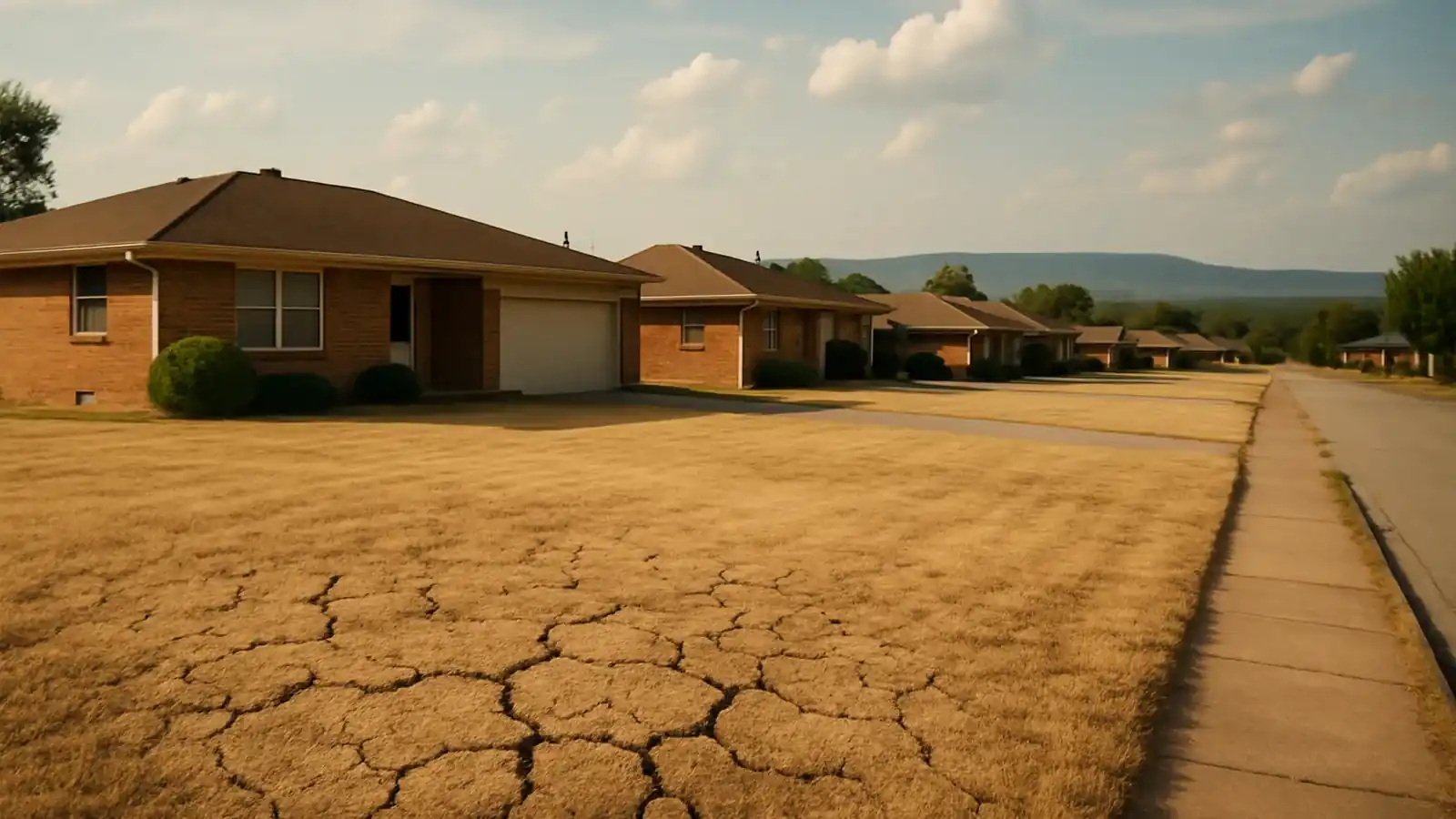
Drainage correction in Tulsa runs $1,500–$6,000 for most lots, and simple downspout and grading fixes often land under $500. Because expansive clay damages foundations through moisture swings, reducing that swing at the foundation line is the least expensive structural work available here.
Here's why water is half the foundation conversation on Green Country clay.
Amplitude is the enemy, not water
Evenly moist soil is survivable. What damages Tulsa foundations is the size of the swing and its unevenness. One side of the house saturated by downspouts while the other bakes through August. The foundation spans that difference, and the structure racks.
That's why the evaluation walks the outside of your house as carefully as the inside: gutters and downspout terminations, the slope of the first ten feet of ground, mulch beds holding moisture against the wall, air conditioner condensate, large trees drinking hundreds of gallons on hot weeks, and where the neighboring lot drains. Those findings frequently explain the crack pattern better than the crack does.
The ladder, cheapest first
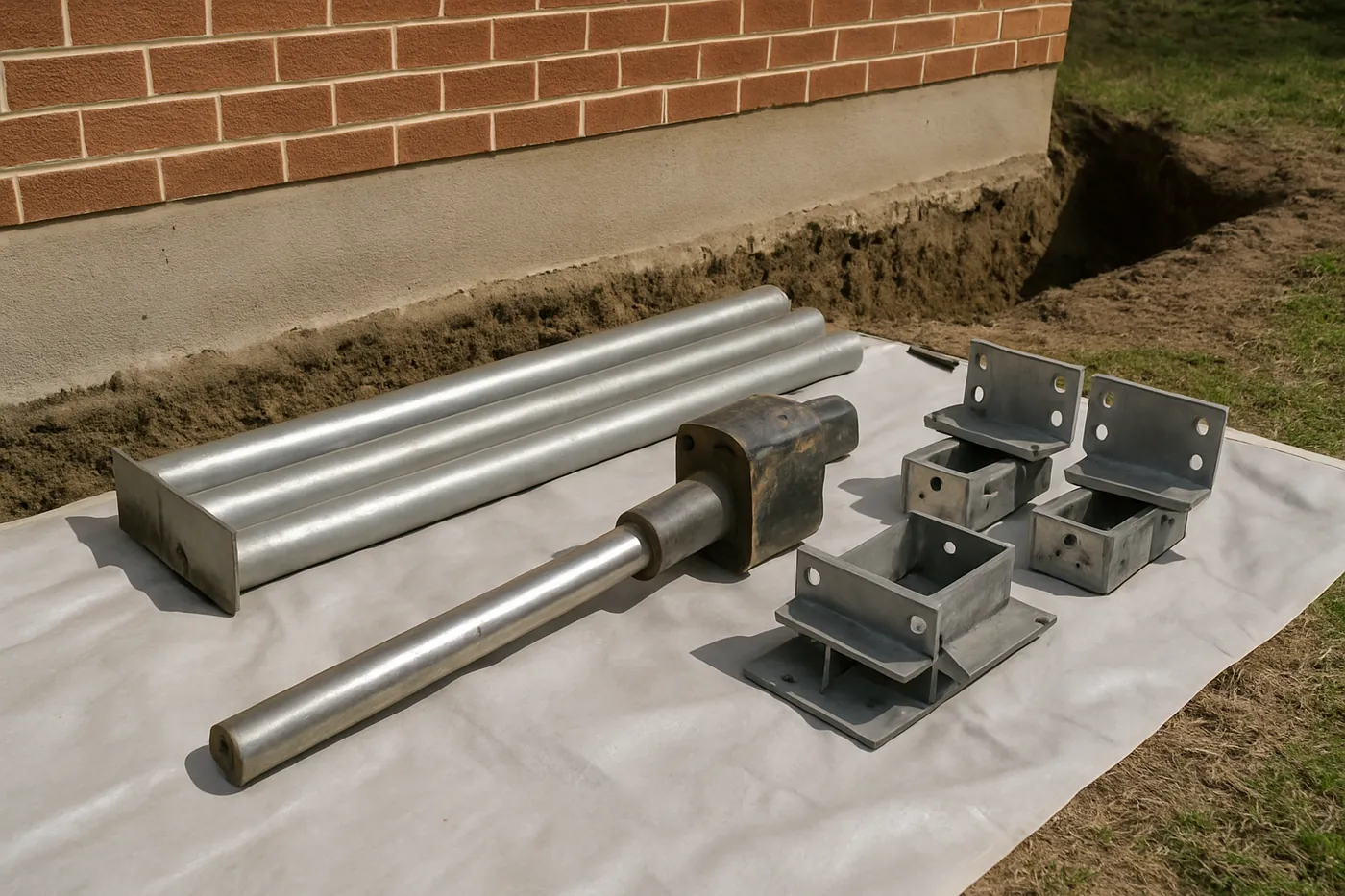
- Downspout extensions: carry roof water well clear of the wall; often under $500 and frequently decisive
- Regrading: restore fall away from the foundation where decades of settling have reversed it
- Swales and surface routing: intercept runoff crossing the lot before it reaches the house
- Subsurface drain lines: bedded properly with a walked and verified discharge, sized for rain that arrives all at once rather than steadily
- Root management: a mature tree drinks hundreds of gallons in a hot week and dries its side of the house faster than the rest
Capacity moves up the list here. In a drought-to-deluge climate the question is not only where water goes but how much of it arrives at once, and surface routing that copes with a steady soak can be overwhelmed by a single storm.
What not to buy
A drain system where extensions would do. Expansive clay percolates poorly, so a drain line without a real discharge point fails quickly and expensively, which is why every subsurface line should be walked to its termination before it's quoted. If four extensions and a regrade solve your problem, that's what the written scope says, at that price.
Stop the water arriving, or manage it after it does?
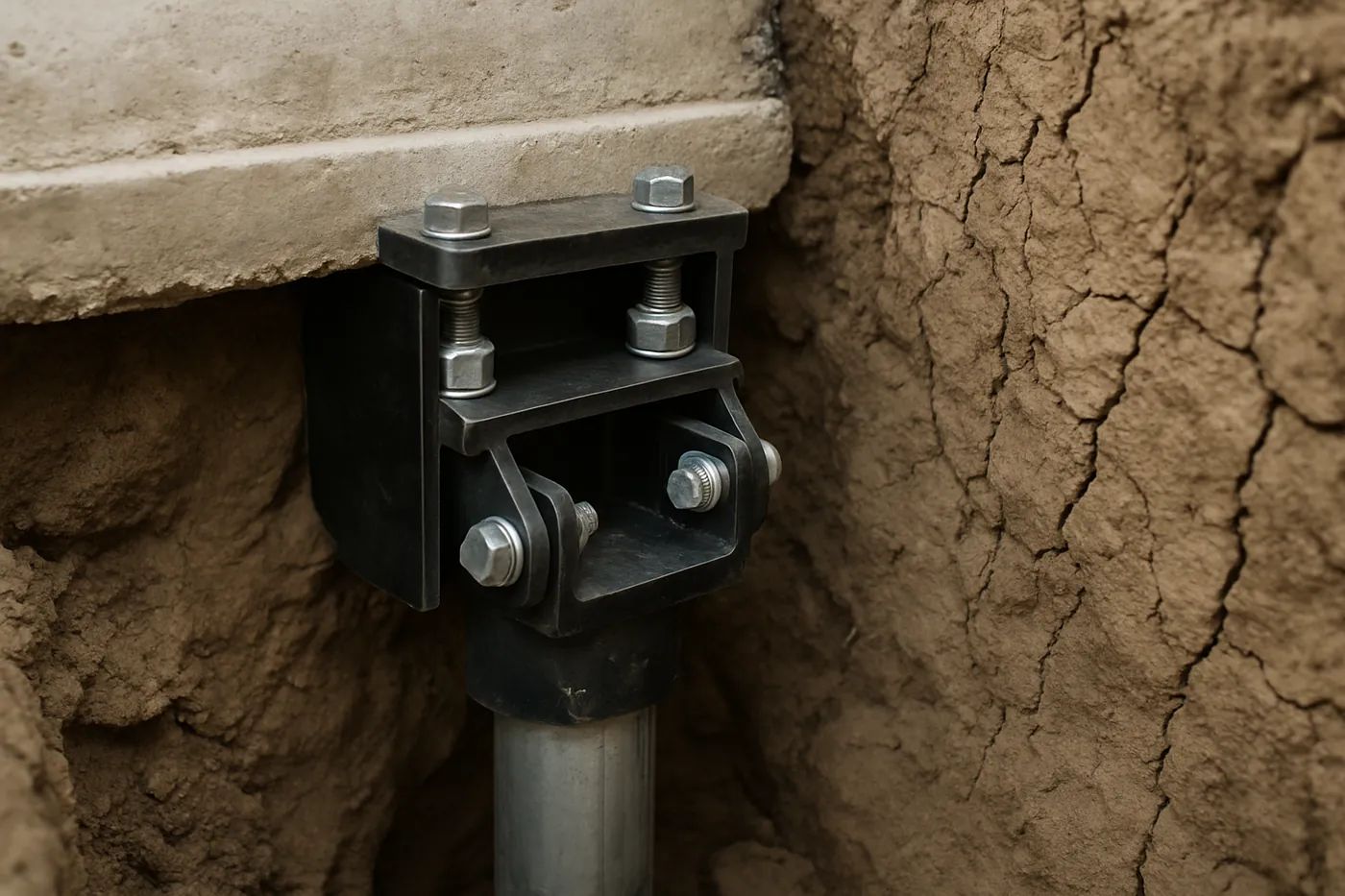
The deluge half of Oklahoma's cycle arrives fast and all at once, and drainage that would satisfy a gentler climate backs up exactly when it matters here.
| Option | What it does | The catch in this market |
|---|---|---|
| Roof water discipline | Gutters and extensions carried past the backfill | Size for the storm, not the average: short extensions drown in the first deluge |
| Regrading | Ground re-pitched so it sheds away from the wall | The fix for lots that have settled toward the slab over years of cycling |
| Buried drain line | Perforated pipe intercepts water moving through soil | Earns its keep intercepting sheet flow before it reaches the clay at the wall |
| Interior drain and pump | Collects what still arrives and ejects it | The backstop for older midtown basements when the sky opens |
The same clay that floods in May bakes in August, so drainage here is one half of a moisture-evenness problem. The other half is not letting the summer get too dry.
Drainage questions, straight answers
Can drainage work prevent foundation repair?
Caught early, genuinely yes. Clay damages foundations through moisture swings, so steadying moisture at the foundation line reduces the swing. Extensions and regrading often cost a few hundred dollars against thousands for piering, which is why they belong at the top of any scope rather than appearing as an upsell.
What should the grading look like?
Ground should fall away from the foundation roughly six inches over the first ten feet. Tulsa lots frequently lose that over decades as beds build up and soil settles, leaving a reverse slope that channels every storm toward the wall. Correcting it is dirt work, not construction, and it's the cheapest insurance available.
Should I water my foundation during an Oklahoma drought?
Consistent moderate moisture at the drip line during extended dry spells does reduce the shrink half of the cycle: a soaker hose on a timer, not a flood. It's mitigation, not repair: a footing that has already settled needs bearing, not irrigation. And overdoing it creates the opposite problem.
Do I need a French drain?
Sometimes, often not. Where a lot receives runoff from uphill or holds water against the foundation after storms, a properly bedded and discharged line is right. Where the real problem is four downspouts dumping at the wall, extensions solve it for a tenth of the cost. Ask for the smallest fix that ends the water to be priced.
Get a Tulsa foundation evaluation
Tell us what the house is doing (stair-step cracks, doors that stick every August, sloping floors, separating trim) and we'll pass it to one independent local specialist for an evaluation. A local specialist who serves Tulsa will call you back.