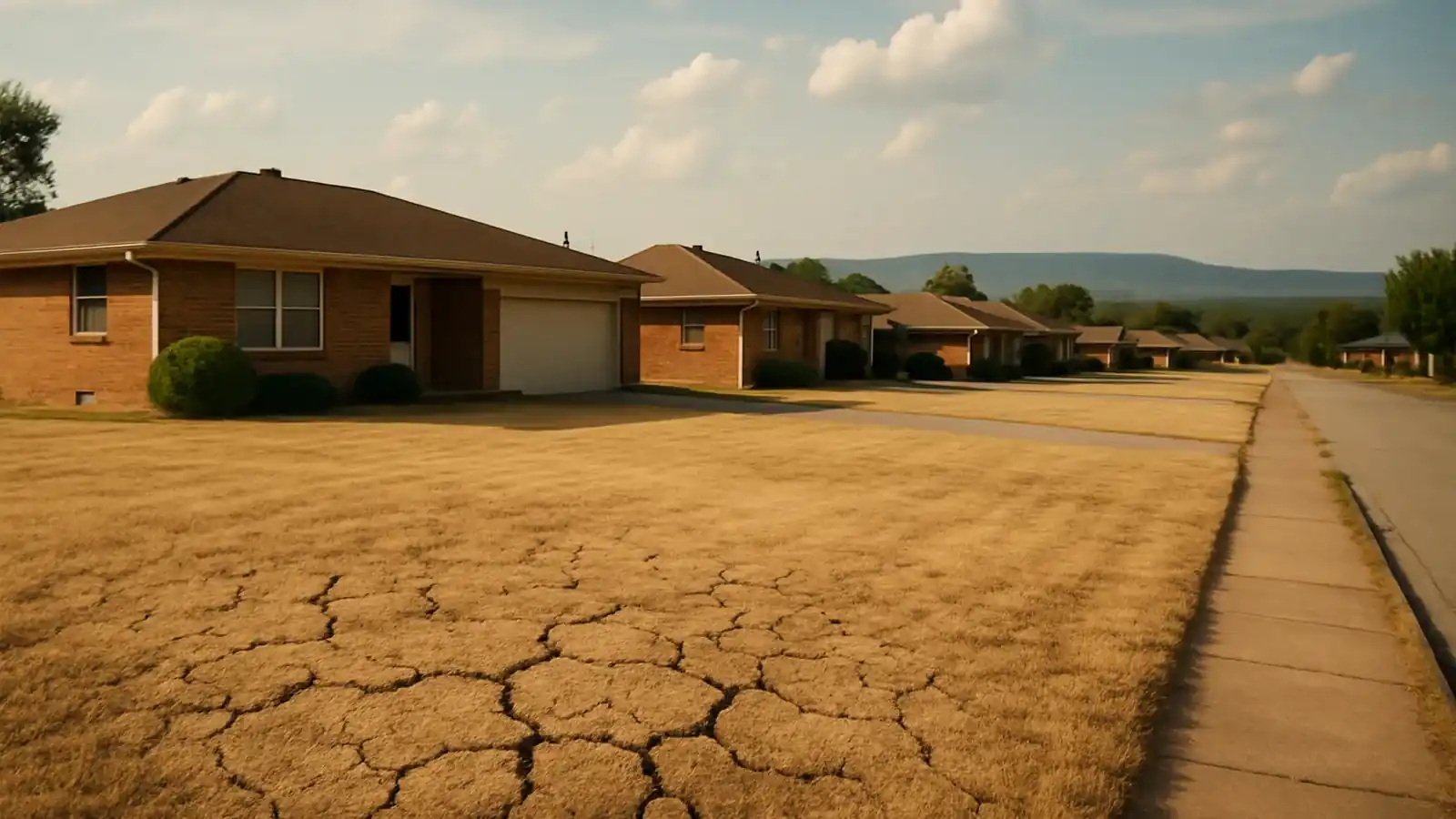
Slab foundation repair in Tulsa runs $3,500–$12,000 for most homes, depending on how much of the slab lost support and whether interior piers are needed alongside perimeter work. The cause is almost always the same: expansive clay contracting beneath the concrete.
Slab homes fail differently than pier-and-beam homes. Here's how to read yours.
What a slab does when the clay beneath it moves
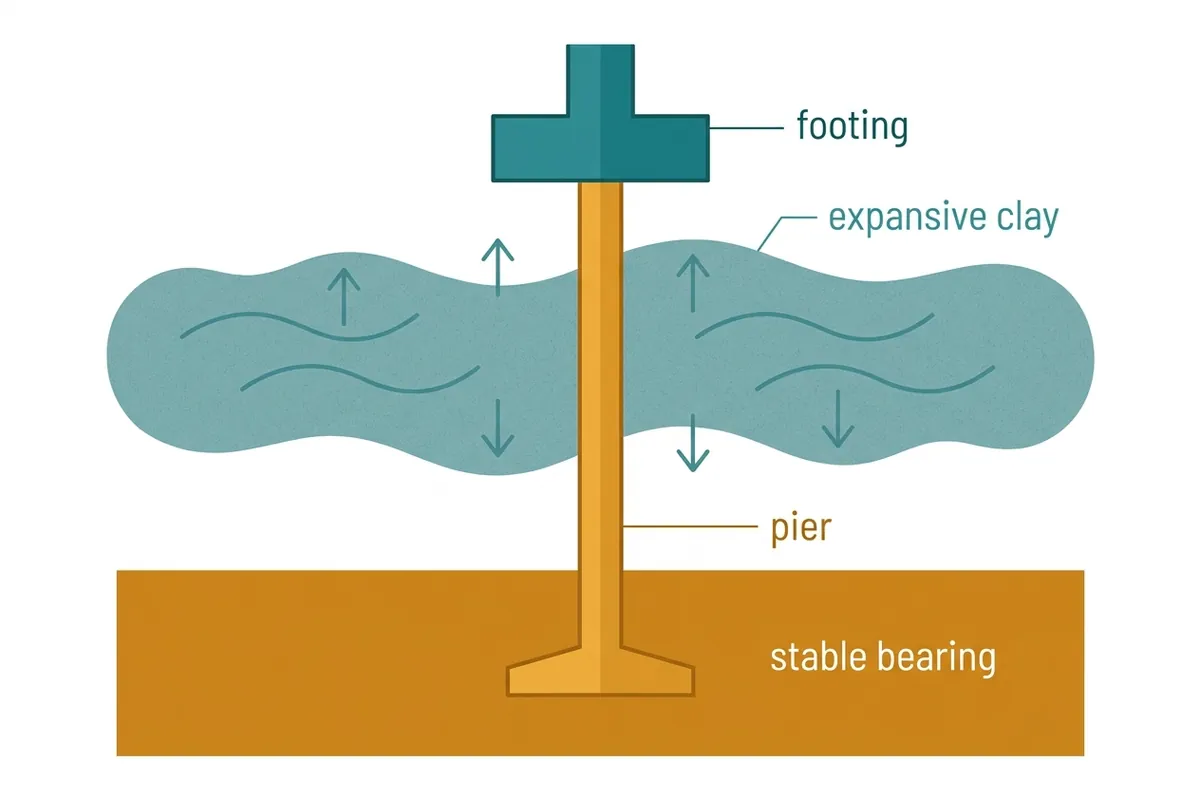
A slab-on-grade foundation is a single concrete plane resting directly on soil: no crawl space to inspect, no beams to sister. When the clay under it swells through a wet stretch and contracts through an Oklahoma dry spell, the slab follows. Uniform movement causes little damage. The problem is differential movement: one edge holding while another drops, or the perimeter staying put while the center dishes downward as the soil beneath the middle dries out.
That differential racks door frames, cracks tile in a line, and separates trim from walls. By the time it's visible, a laser survey typically shows an inch or more of elevation difference across the floor plan.
Perimeter piers, interior support, or both
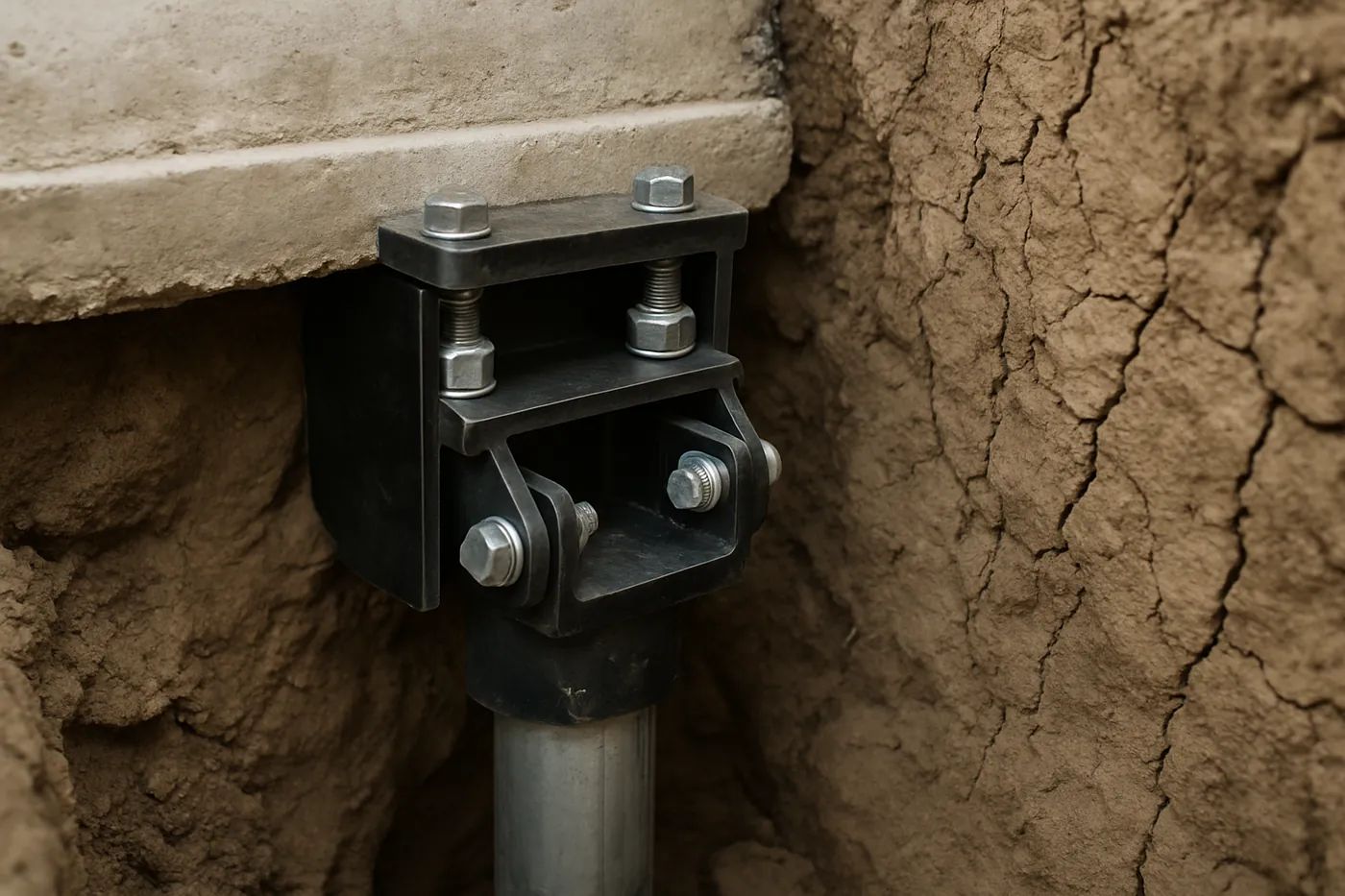
Where the survey shows the outside edge dropped, perimeter piers carry the slab's bearing walls to stable ground. Where the low point sits in the middle of the plan, interior support is required: slab piers through small openings, or polyurethane injection lifting the slab back onto a stable base. Many Tulsa-area homes need a combination, and the elevations set the proportion rather than a package price.
The suburban growth belt has its own version
Broken Arrow, Owasso, Jenks, and Bixby grew fast, and much of that growth layered engineered fill over native clay. Fill consolidates on its own decade-long clock while the clay beneath keeps its seasonal rhythm regardless, so a twelve-year-old house can show movement that reads like an older problem. Distinguishing fill settlement from clay cycling is the first diagnostic question on those lots, and it changes the pier depth specification.
What are the honest options for a moving slab?
A Tulsa slab lives on the drought-to-deluge cycle: the clay pulls away in a dry stretch, the slab spans the gap for a while, and the crack arrives before the next rain does.
| Option | What it does | The version of it you get here |
|---|---|---|
| Deep support | Piers beneath the slab carry it past the clay | The opt-out: support passes through the active clay and the cycling continues without the house |
| Fill the gap | Grout replaces soil that pulled away underneath | For the voids a hard summer opens where the clay retreated |
| Water discipline | Evens out the moisture the ground sees in a year | Evening out the extremes trims the swing the slab has to survive |
| Repour the section | Removes and replaces concrete past saving | For panels the cycle has already broken through |
Date the cracks against the weather. On this pattern, damage that tracks the dry stretches is the clay's rhythm, and rhythm is what moisture discipline can actually change.
Slab repair questions, straight answers
How do I know if my slab is actually moving?
The house tells you before the concrete does: doors racking out of square, diagonal cracks from door corners, tile cracking along a line, floors reading out of level with a laser. A slab crack by itself is common and often harmless. It's the pattern around it that separates shrinkage from movement.
Can a slab be lifted, or only stabilized?
Both are possible. Perimeter piers stabilize and often recover some elevation; interior slab piers or polyurethane injection address the middle of the floor where clay has dropped away. Which combination your house needs depends on where the survey finds the low points, and the scope says so plainly.
My Broken Arrow home is twelve years old. Should it be moving?
On this clay, yes, it can be. Newer subdivisions often layer builder fill over native soil, and the two settle on different schedules while the clay underneath keeps swinging with Oklahoma's weather. Age predicts less here than soil and drainage do.
Could a plumbing leak be causing this?
It's worth ruling out. A leaking supply or drain line under a slab washes out soil and produces settlement that looks exactly like clay movement, and repairing the foundation without fixing the leak guarantees a return visit. When the pattern suggests it, a good specialist recommends a plumbing test before scoping structural work.
Get a Tulsa foundation evaluation
Tell us what the house is doing (stair-step cracks, doors that stick every August, sloping floors, separating trim) and we'll pass it to one independent local specialist for an evaluation. A local specialist who serves Tulsa will call you back.