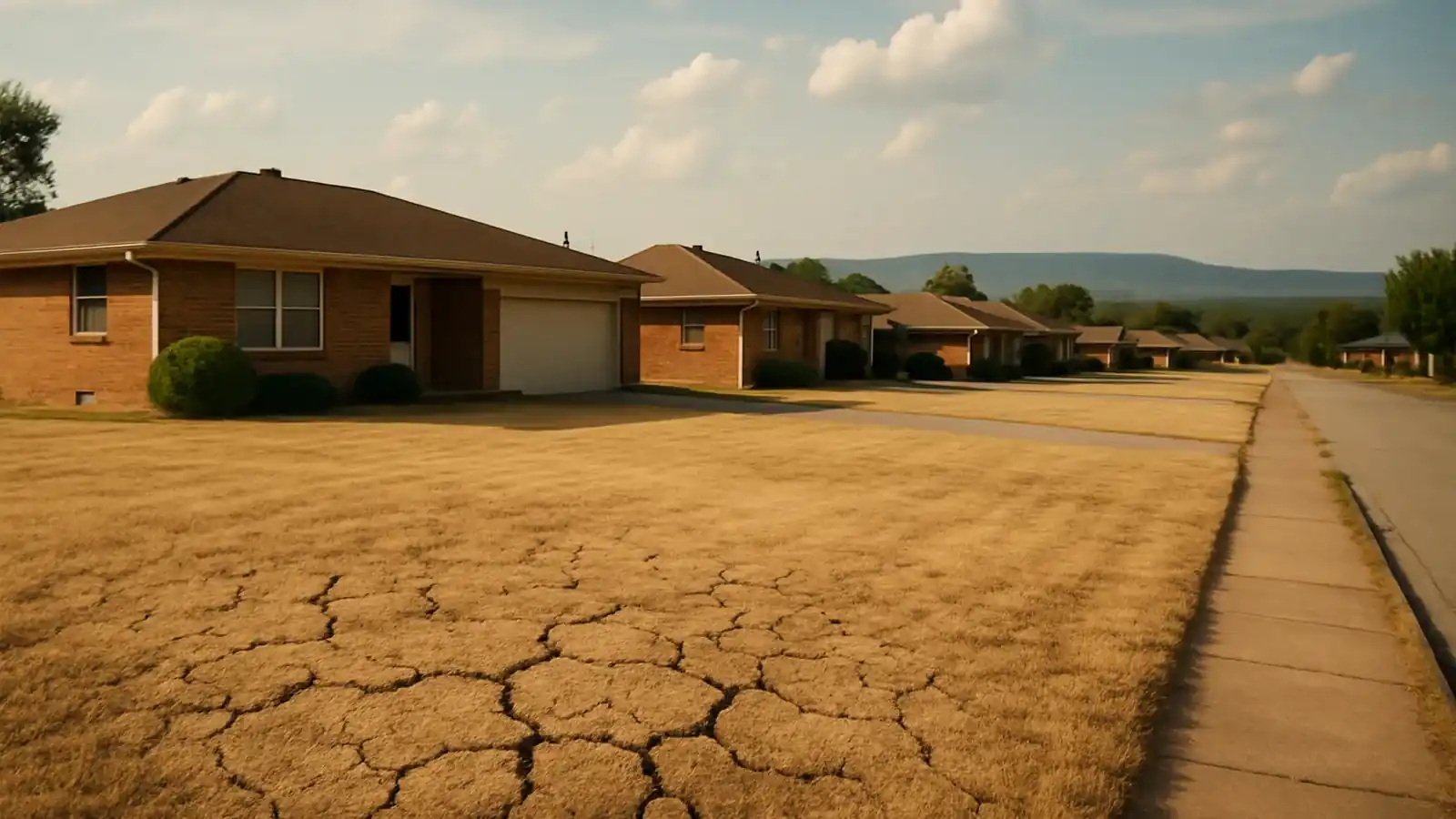
Sand Springs homeowners pay $4,000–$15,000 for most structural foundation repairs, from about $400 for a single crack injection. Expansive clay withdrawing support during dry spells is the mechanism, and it's what a measured evaluation is built to detect before it worsens.
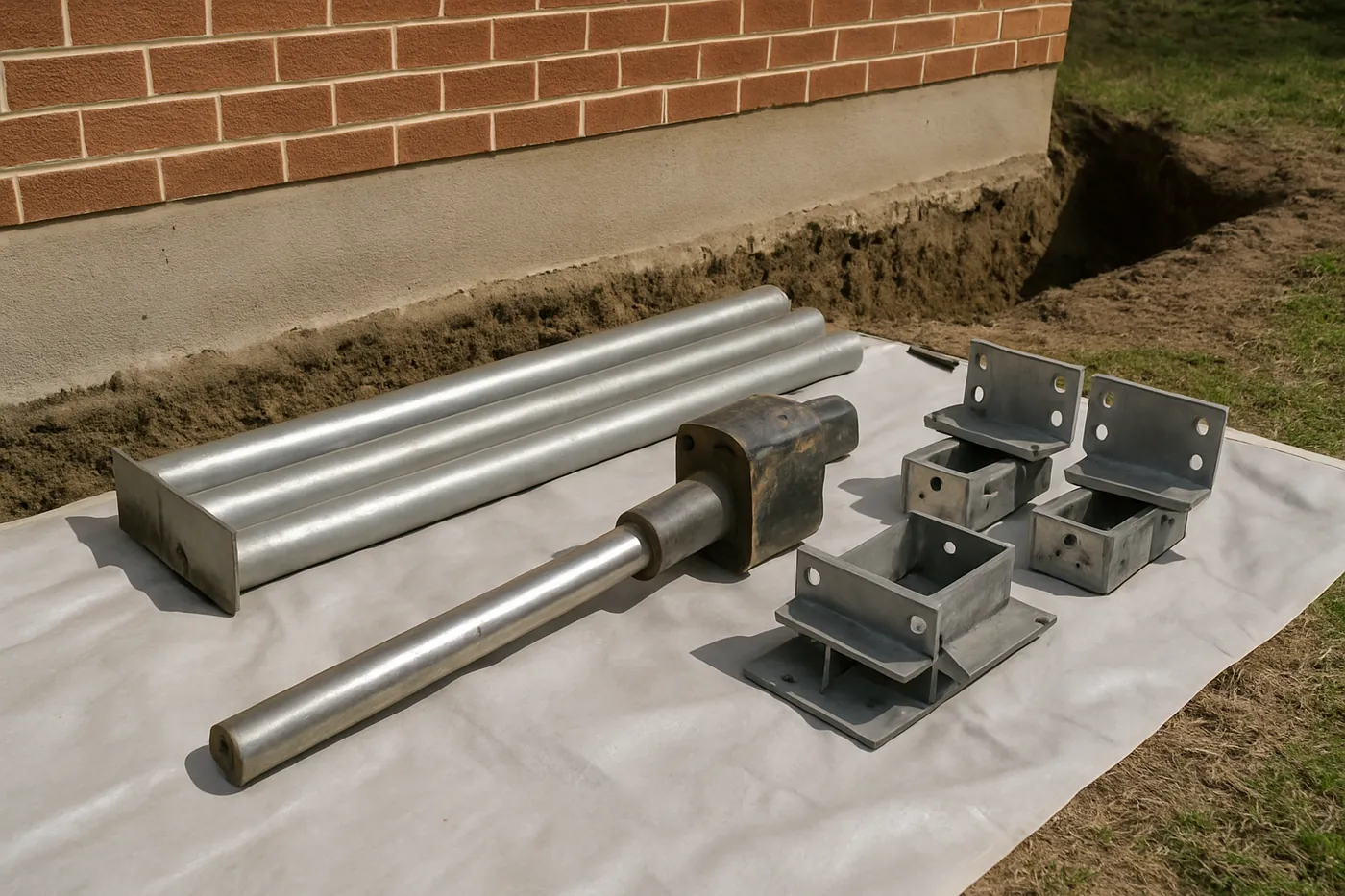
Terrain that moves water with intent
Sand Springs sits on noticeably more varied terrain than the metro's flat suburban belt, and slope changes the foundation conversation. Storm water arrives with momentum and concentrates where the grade sends it, so uphill-side foundation walls take runoff loads that level-lot houses never experience. Interception above the house (a swale or drain line upslope) typically accomplishes more than anything applied at the wall itself.
Hillside lots also produce cut-and-fill construction more often, since building pads on sloped ground require it. That brings the familiar differential-settlement question, sometimes in a sharper form than on flatter lots because the fill depths involved are greater.
Older housing, longer histories
Sand Springs' industrial-era housing stock is older than much of the metro, which means more pier-and-beam construction and more homes whose foundations have been cycling for sixty or seventy years. Those repairs favor preservation: probing framing and piers before condemning them, resetting posts onto proper footings, and replacing only what a probe actually condemns. Movement that has accumulated over decades won't reverse, and a good specialist is straightforward about that: stabilization is the goal.
Asked in Sand Springs
Our house is cut into a hillside. Is that the problem?
The slope directs the water, and water is usually the problem. An uphill foundation wall holds back both soil and every storm crossing the property above it. Interception upslope (a swale or drain line above the house) typically accomplishes more than anything applied at the wall.
Are older Sand Springs homes worth repairing?
Almost always. Industrial-era housing here was solidly built, and its problems are age-and-moisture problems rather than build-quality problems. Preservation-minded repair (probe first, reset posts on proper footings, replace only what's condemned) typically costs no more and preserves a durable house.
Our floors have sloped for decades. Urgent?
Long-standing slope that isn't changing is usually stable and can be monitored. What deserves attention is slope that's worsening, or that arrives alongside new cracks. A laser survey gives you a documented baseline so 'is it getting worse?' becomes a measurable question rather than a memory test.
Is hillside drainage work part of the job?
Routinely. It's most of what Sand Springs scopes lead with. Slope lots get their water path walked before anything structural is priced, and discharge lines get walked to their termination. On this terrain the drainage design usually determines how much structural work follows.
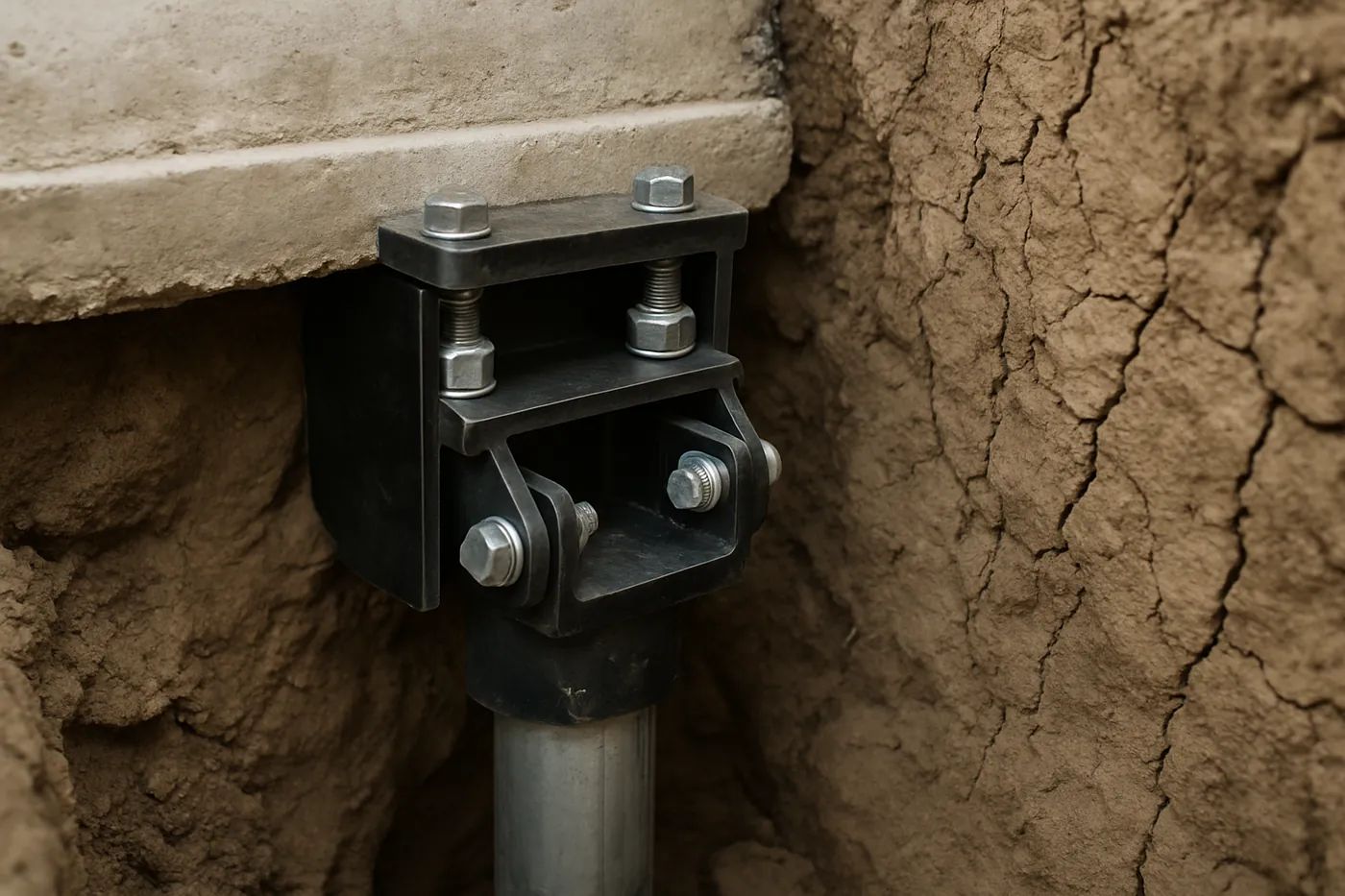
Next step for your Sand Springs house
Mark and date the crack, then get the baseline: knowing is cheap. The evaluation takes about an hour; ask for a written report with floor elevations. Costs are itemized in the cost guide; nearby communities are under service areas.
Get a Tulsa foundation evaluation
Tell us what the house is doing (stair-step cracks, doors that stick every August, sloping floors, separating trim) and we'll pass it to one independent local specialist for an evaluation. A local specialist who serves Tulsa will call you back.