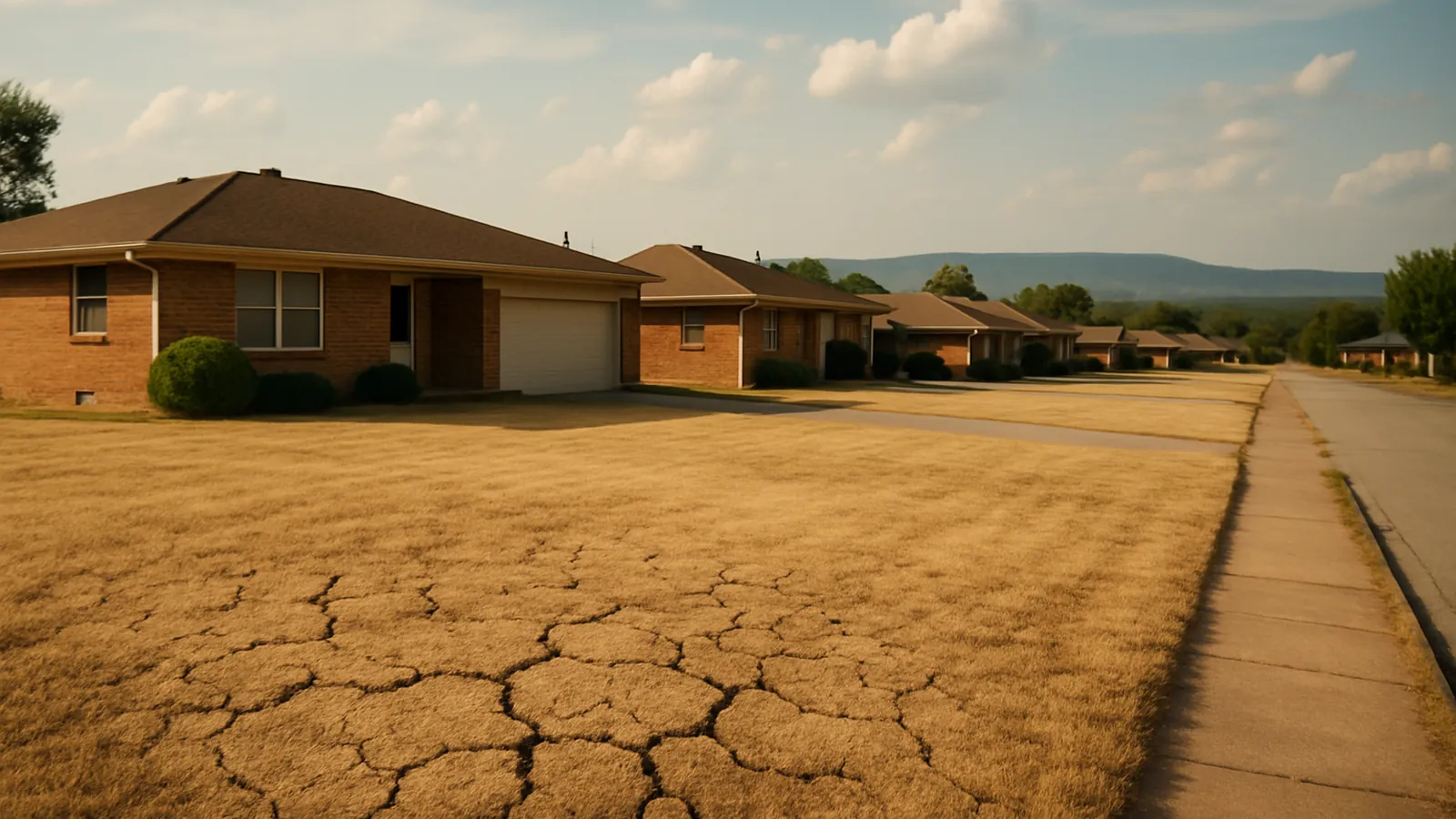
Foundation settlement repair in Tulsa runs $4,000–$15,000 for most homes, using piers at $1,200–$3,000 each where an elevation survey shows the footing dropped. Green Country’s drought-to-deluge cycle swings the Arkansas River valley’s expansive clay hard, and settlement is the house following the shrink.
The Oklahoma moisture cycle, how each housing type reports it, and what repair involves.
Settlement on drought-to-deluge clay
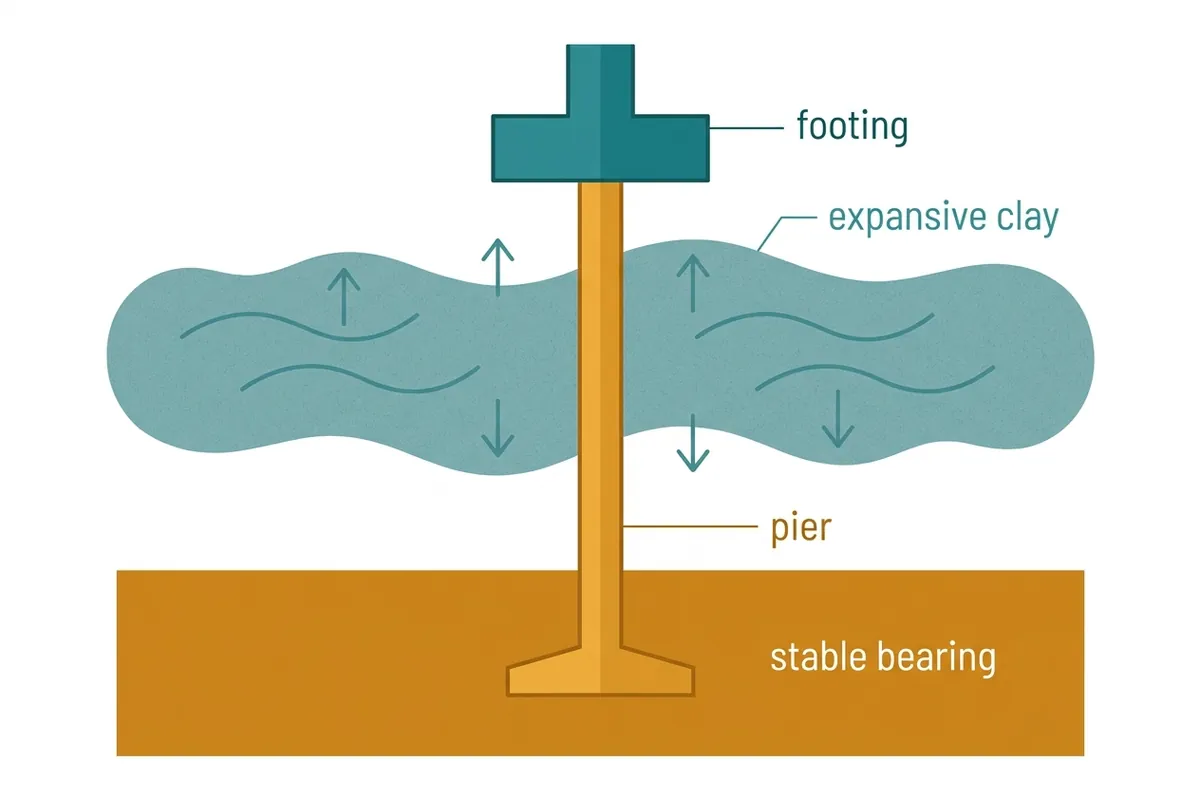
Tulsa’s roughly 42 inches of rain would steady most soils if it arrived evenly. It doesn’t — it comes as soakings separated by hot, dry stretches, and the expansive clay under the metro swells and shrinks with each swing. Settlement is the shrink half of that ledger: a dry run pulls moisture from under a footing, the clay contracts, and the foundation eases down into the space. The deluge that follows swells the soil back, but never all the way — the gap has already taken in silt and debris, and the footing keeps the loss.
The pattern is directional. South- and west-facing runs bake first; corners under a downspout that dumps and then dries cycle hardest; and big post-oak and elm root zones pull extra moisture in exactly the summers the clay can least afford it. Differential movement — one run down, the rest holding — is what cracks brick and racks frames, and it’s what the laser survey maps in an hour.
Three foundations, three ways of telling you
| Foundation | How settlement shows | Typical repair path |
|---|---|---|
| Slab-on-grade (the suburbs) | Floor cracks, tile lines opening, drywall cracks at corners | Perimeter piers; interior lifts — see slab repair |
| Pier-and-beam (midtown) | Sloping, bouncy floors; gaps at baseboards; doors drifting | Individual footing, sill, and girder work — see pier & beam |
| Partial basement (older stock) | Stair-step cracks in block; racked frames above | Perimeter piers, wall crack repair after |
The mix is the Tulsa signature: Broken Arrow, Owasso, Jenks, and Bixby are overwhelmingly slab, while midtown’s 1920s–40s bungalows ride pier-and-beam. The diagnosis has to know which house it’s in before it can price anything.
How the repair works
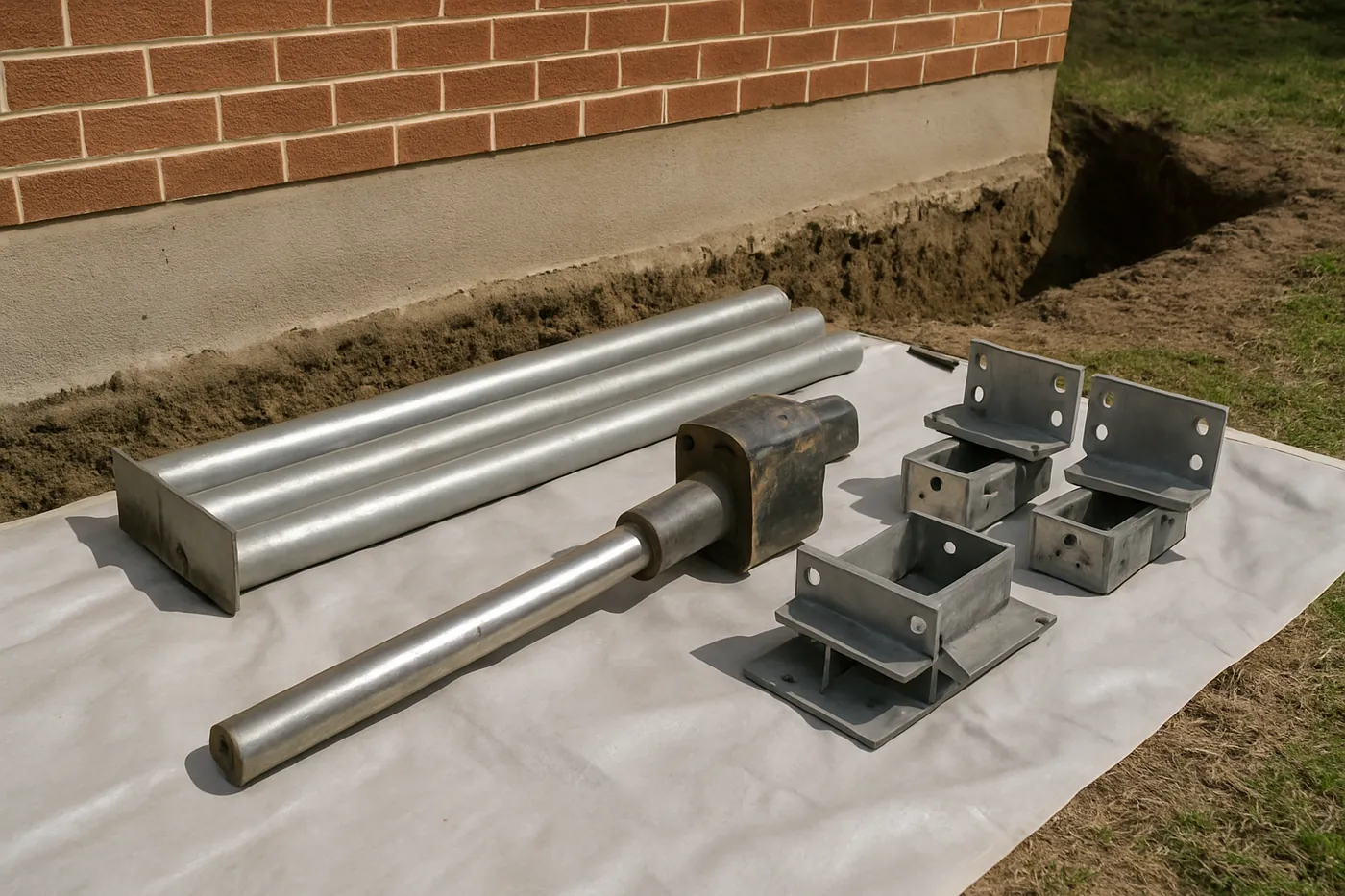
Where a perimeter footing dropped, steel piers are installed beside it and driven or torqued to bearing below the active clay, each one logged — the mechanics live on the piering page, and the choice of steel is the helical-versus-push question. Pier-and-beam homes often skip perimeter steel entirely: their settlement concentrates at interior footings that can be re-supported and shimmed individually. Lift is attempted where the structure can take it, monitored against crack widths, and cracked masonry gets injection and stitching after the movement is resolved.
What moves the number
- Displacement — how far things traveled before measurement.
- Foundation type — interior pier-and-beam corrections can run lighter than perimeter steel; slabs price by the affected run.
- Depth to bearing — valley alluvium near the river and upland clay put stable strata at different depths, and deeper means more sections per pier.
- The moisture engine — if grading or discharge drove the cycle, drainage correction belongs in the same scope or the clay resumes its schedule.
The cost guide itemizes every range and what pushes a job toward each end.
The first year after the piers
Piers stop the movement; they don’t erase its history. Give the house one full cycle of this valley’s weather before chasing cosmetics — and Tulsa’s cycle is the whole argument, swinging from drought that shrinks the clay to deluge that swells it back. Hairline cracks breathe through that swing, so patch drywall and re-point brick after a complete drought-to-deluge year and you patch once. Monitoring is free: a dated photo and a pencil line across each crack answers “is it still moving?” in seconds. And keep watering the perimeter through August. Soaker hoses aren’t a repair, but on soil that shrinks this hard they keep the unpiered parts of the house from writing you a new problem.
Settlement questions, straight answers
Why does Tulsa settlement come in bursts?
Because the weather does. Green Country's drought-to-deluge pattern means the clay spends weeks shrinking through a dry stretch, then re-wets fast when the rain returns — about 42 inches a year arriving unevenly. Footings drop during the shrink and don't fully recover on the swell, so damage accumulates in steps that track the driest summers.
Which houses settle worst here?
The ones whose foundations touch the most clay. Slab suburbs in Broken Arrow, Owasso, Jenks, and Bixby ride the soil across their whole footprint; midtown pier-and-beam homes concentrate load on isolated footings that can drop individually. Both settle — they just report it differently, floors cracking in one case, floors sloping and bouncing in the other.
Is a hot dry August the time to worry?
It's the time to measure. Late-summer dry stretches are when the clay pulls back hardest and doors start sticking across the metro. Some of that movement is seasonal breathing that partially recovers; the worry case is displacement that survives the autumn rains. An elevation survey in the dry season, repeated after the wet, separates the two cleanly.
Can better drainage stop the settlement?
It can slow the engine. Settlement here runs on moisture swings, and grading, downspouts, and discharge corrections — $1,500 to $6,000, often less — shrink the swing itself. Drainage is the right first move when movement is early and small. Once a footing has measurably dropped, drainage protects the repair but piers do the lifting.
What does settlement repair cost in Tulsa?
Most full repairs run $4,000 to $15,000, assembled from piers at $1,200 to $3,000 each placed where the survey shows loss. Pier-and-beam homes sometimes repair for less because individual interior footings can be corrected without perimeter steel. The written scope prices each location so the number explains itself.
Get a free Tulsa foundation evaluation
Tell us what the house is doing — stair-step cracks, doors that stick every August, sloping floors, separating trim — and we’ll schedule an evaluation with photos and measurements. We reply the same business day.