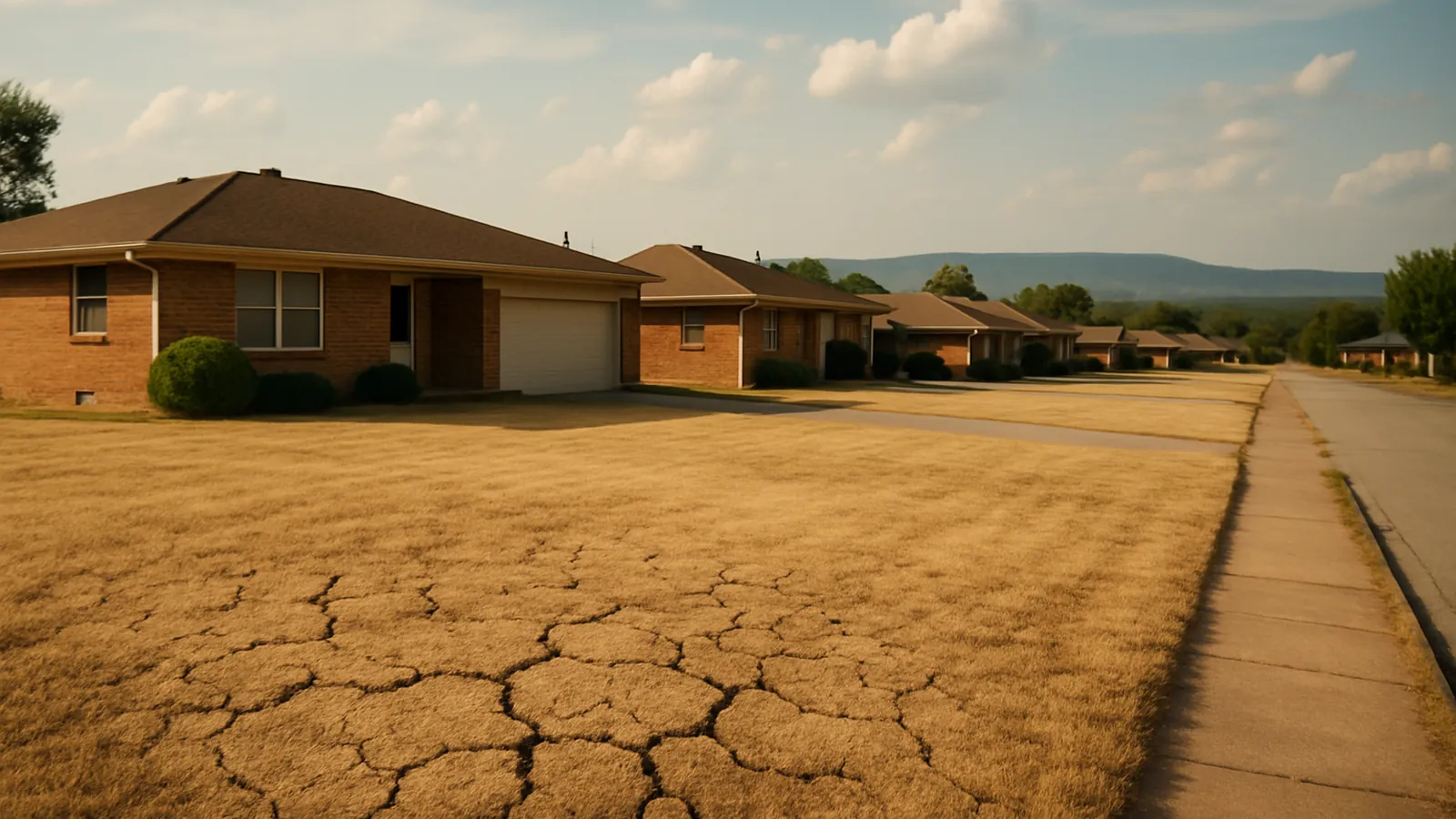
Pier and beam foundation repair in Tulsa ranges from shim-and-relevel work at the light end to full repairs at $4,000–$15,000, with steel piers at $1,200–$3,000 each where needed. Midtown’s 1920s–40s homes ride isolated footings on expansive clay — and every element is individually inspectable and repairable.
What lives under a midtown floor, how each part fails, and how releveling actually goes.
What’s actually under a midtown Tulsa house
A pier-and-beam home rests on a perimeter beam plus a grid of interior piers — masonry or concrete footings — carrying wood girders, with floor joists spanning between them and a crawl space underneath. Midtown, Maple Ridge, and the older neighborhoods between the river and Route 66 are full of this construction, and it behaves nothing like the slab suburbs: load concentrates at points, wood does structural work, and the clay negotiates with each footing separately. When Green Country’s moisture cycle runs, a single footing can drop while its neighbors hold — which is why these floors slope in patches rather than tilt as one plane.
The four failures, and what each takes
| Failure | What you notice | The repair |
|---|---|---|
| Footing settlement | Sloping floor over one area | Re-support: new pad or pier, jack and relevel |
| Sill or girder moisture damage | Bounce, soft spots, musty crawl space | Replace affected sections — shimming rot is painting rust |
| Crushed or walked shims | Gaps at baseboards, doors drifting | Proper steel or hardwood shims, load rechecked |
| Legacy improvisation | Stacked bricks, stranded jacks under there | Engineered supports in their place |
Most houses present a combination, which is why the evaluation is a crawl-under with a flashlight and a moisture meter, not a walk around the outside. You get photographs of everything we found where it sits — the crawl space is the rare place a homeowner can verify every claim in a bid, including ours.
Releveling, step by step
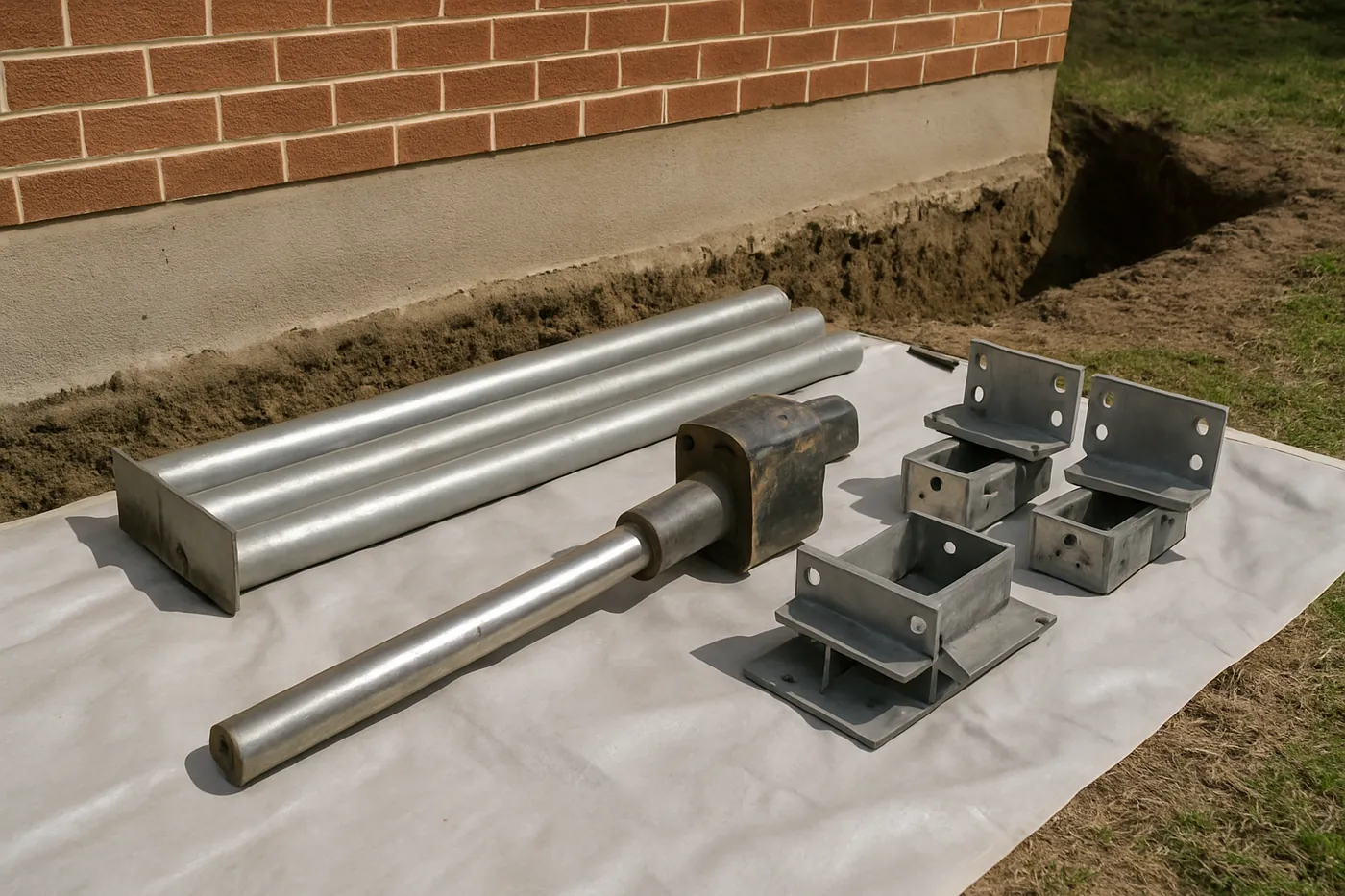
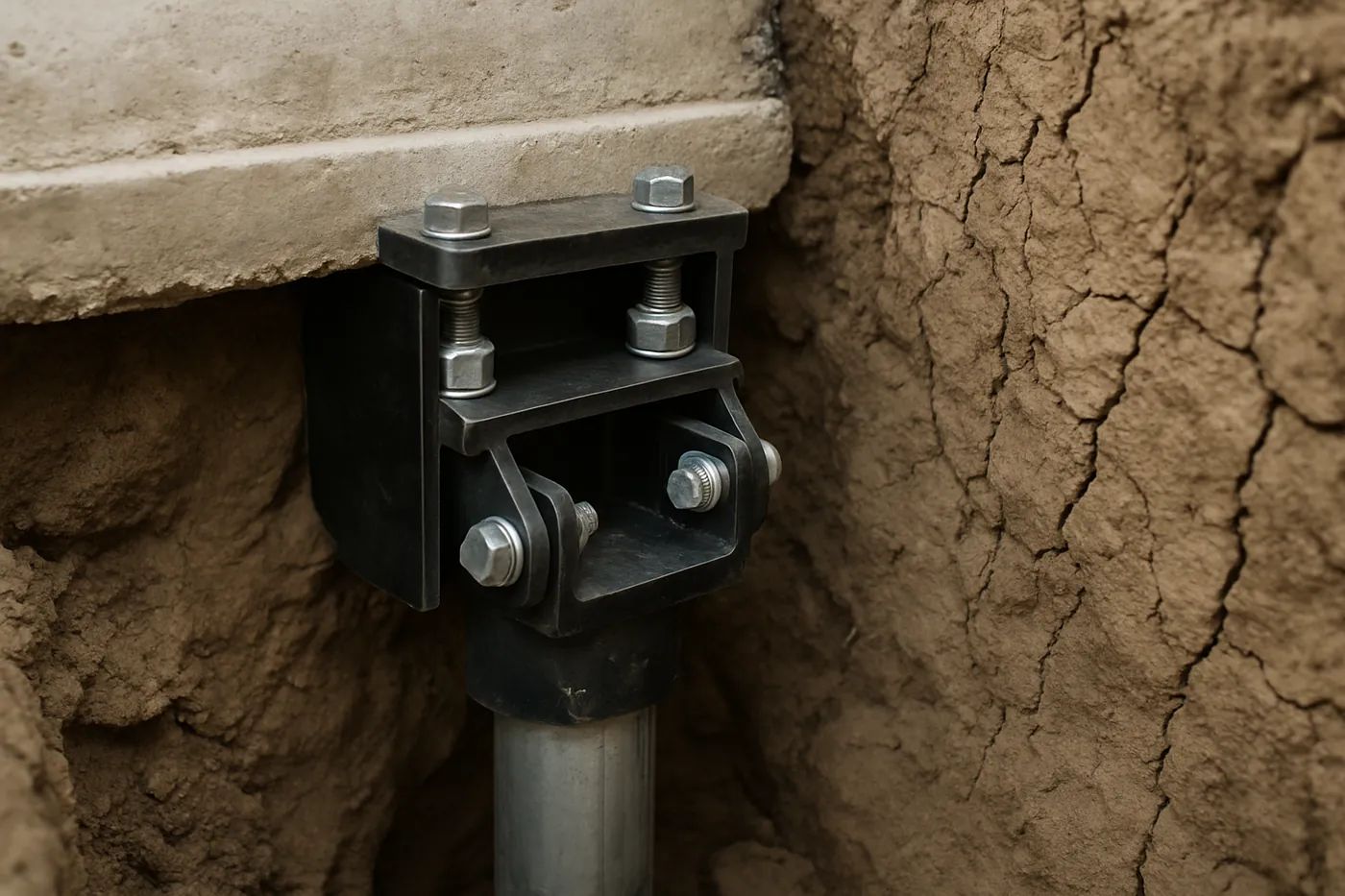
Elevation survey upstairs first — the floor map says which girder runs are low and by how much. Underneath, hydraulic jacks lift the affected runs in small increments, checked against the map as they go; failed shims come out for steel or seasoned hardwood; undersized or sunk footings get new pads, or helical piers where the clay has proven it won’t hold a shallow pad. Lifting stops when the floor is within tolerance, not when it looks done. Where the clay cycle drove the settlement, the same visit prices drainage correction outside — the cheapest way to keep the new level.
Slab neighbors, different rules
Half of what makes Tulsa repair interesting is that the metro runs both systems side by side: midtown on wood and points, the suburbs on slab-on-grade, and the diagnosis, the tools, and the prices all change at that line. If part of the house was converted or added on slab — common in older remodels — the two halves get read separately, because the clay moves them separately. Settlement mechanics for the whole metro live on the settlement page, and every range is itemized in the cost guide.
After the releveling: what to expect
A releveled pier-and-beam house is a house put back in tolerance, not a new one. Doors and windows usually improve within days as the frame relaxes into position, and some need a final adjustment once it has — wait a few weeks before re-hanging anything. Expect a few drywall and plaster cracks to open slightly during the lift itself; that is the movement being reversed, and it is normal on midtown houses that have been out of level for decades. Then keep the crawl space in the condition the repair assumed: ventilation and drainage as installed, no soil piled against the beams, and a look underneath every spring. Shims walk when the ground under the piers gets wet and dries again.
Pier & beam questions, straight answers
How do I know my pier-and-beam foundation has a problem?
The floor tells you first: slopes you can feel walking, bounce near the middle of rooms, gaps opening under baseboards, doors that drift or drag. Under the house, the story is visible directly — leaning piers, crushed shims, a girder sagging between supports, sills tracking powdery wood. It's the most inspectable foundation type there is, which is its quiet advantage.
What actually fails under a midtown house?
Four things, usually in combination. Isolated footings settle as the clay cycles. Wood sills and girder ends take moisture damage where ventilation is poor. Shims and blocking crush or walk out after decades of load. And past 'repairs' — stacked bricks, bottle jacks left in place — fail on their own schedule. The crawl-under inspection maps all four before anything is priced.
Can a pier-and-beam house be releveled without major work?
Often, yes — that's the type's great virtue. Jacks lift the affected girder run, failed shims are replaced with proper steel or hardwood, undersized footings get new pads or piers, and the floor comes back within tolerance in a day or two. Costs stay well under perimeter-steel territory when rot hasn't spread. Rot changes the scope: sill and girder sections must be replaced, not shimmed.
Should I close the crawl space vents to keep the clay stable?
No — ventilation is what keeps the wood alive. The crawl space needs airflow to shed the moisture the clay breathes out, and sealing vents to slow soil movement trades a foundation problem for a rot problem. Moisture control here means drainage outside and clear vents, not closure. Where standing water shows up under a house, that's a drainage-correction job.
What does pier-and-beam repair cost in Tulsa?
Releveling and shim work often lands at the light end — interior footings and pads run well under perimeter piers, and full repairs range $4,000 to $15,000 only when settlement, rot, and drainage all need answers at once. Steel perimeter piers, where genuinely needed, run $1,200 to $3,000 each. The written scope prices each pier, sill, and girder line separately.
Get a free Tulsa foundation evaluation
Tell us what the house is doing — stair-step cracks, doors that stick every August, sloping floors, separating trim — and we’ll schedule an evaluation with photos and measurements. We reply the same business day.